Start with the buying situation, not the platform
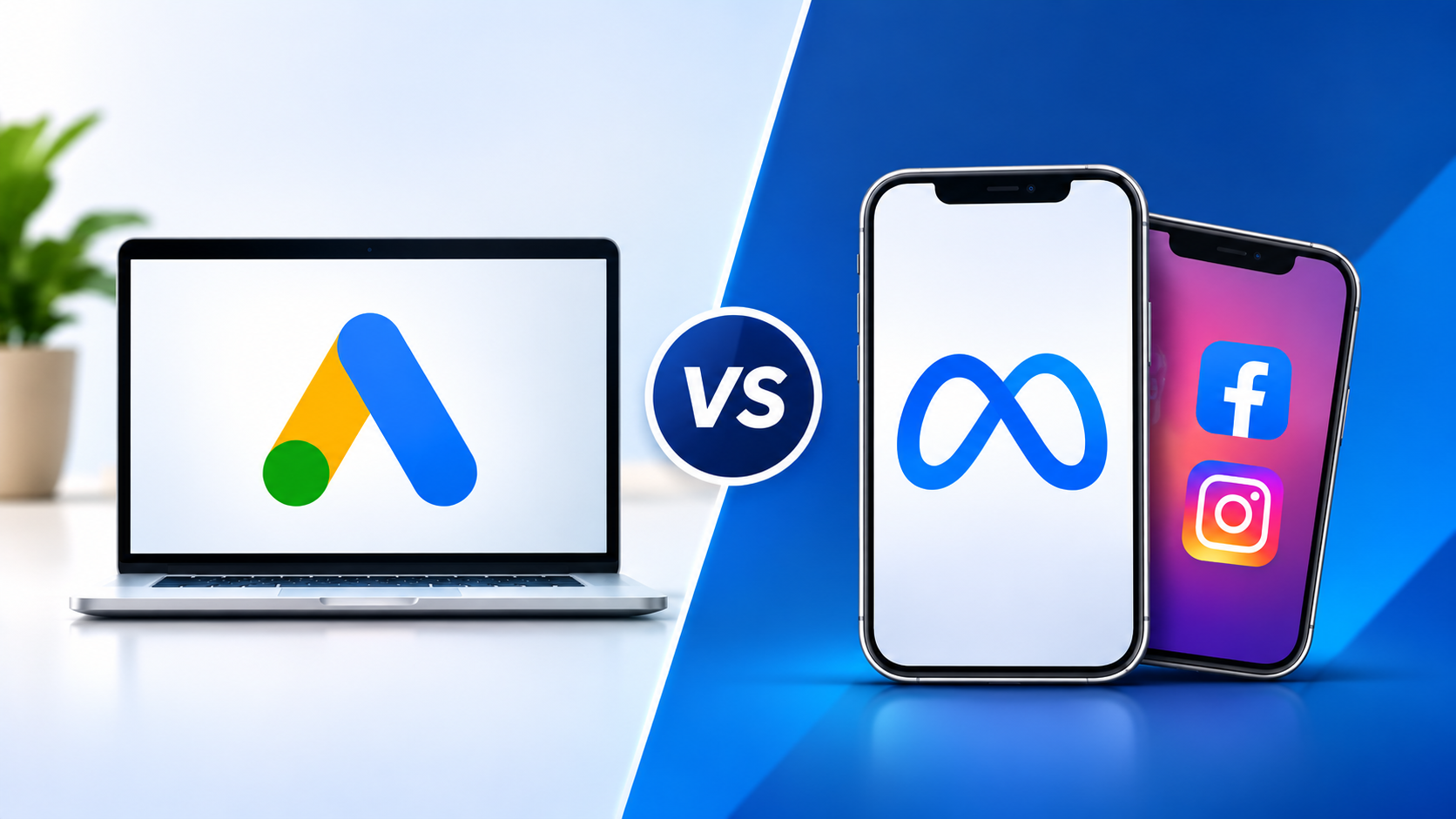
Google Ads and Meta Ads can both generate enquiries and sales. The better starting point depends on how customers discover your category, how urgently they need it, and what you can afford to pay for a customer.
A plumbing company responding to urgent repairs faces a different decision from a new furniture brand introducing an unfamiliar design. Copying another business's channel mix ignores that difference.
For an SME with limited resources, the first objective is not to appear everywhere. It is to build one measurable acquisition process, understand its economics, and then decide whether another channel adds value.
Intent versus discovery
Google Search captures expressed demand
Someone searching for “commercial refrigeration repair near me” has already named a problem. A relevant Search ad can connect that person to a specific service, location and next step.
This makes Google Search a sensible starting candidate when customers actively search for what you sell. However, a search is not automatically a buying signal. Queries about jobs, free templates or repairs you do not provide can consume budget without creating useful opportunities.
Google Ads is also broader than Search. It includes formats and inventory such as video and display, so “Google equals intent” is a useful starting distinction, not a description of every Google campaign.
Meta can introduce demand
Facebook and Instagram ads can reach people while they browse content rather than explicitly search for a supplier. The advertisement must earn attention and make the offer understandable.
Meta can therefore suit visually demonstrable products, experiences and offers that people would appreciate but might not search for by name. A short demonstration of a space-saving desk can explain its value faster than a product description alone.
Discovery does not mean low commercial value. It means the creative usually carries more responsibility for establishing relevance, explaining the benefit and overcoming hesitation.
Use five questions to choose your starting channel
1. Is there relevant search demand?
List the phrases customers use when they are ready to enquire or buy. Review available keyword estimates alongside actual customer conversations. Look for commercial relevance, not simply a large search volume.
If demand exists but the expected click cost is high, work backwards from your conversion rate and margin before committing. Expensive clicks can still work for valuable customers; cheap clicks can still lose money.
2. Does the offer need explanation?
A familiar service with an urgent need often fits a search-led journey. A new category or a product whose benefit becomes obvious in use may need discovery-led creative.
Neither choice removes the need for a useful landing page. The page should continue the promise made in the ad and explain price expectations, suitability and the next step.
3. Can you produce credible creative?
For Meta, assess whether you can regularly create demonstrations, customer stories with permission, product photographs and clear offers. Do not assume one attractive image will sustain every campaign.
For Search, assess whether you can write specific ads, organise relevant keywords, review search terms and improve landing pages. The workload differs; neither platform is genuinely “set and forget”.
4. Can the business handle the response?
A service business that replies to leads days later may waste otherwise useful demand. A retailer with unclear shipping charges may lose buyers after the click.
Check stock, service capacity, delivery coverage, sales follow-up and mobile usability before increasing spend. Advertising amplifies the customer journey you already have.
5. What counts as commercial success?
Choose a primary outcome: qualified enquiries, attended consultations, purchases or profitable new customers. Define it before launch.
If you optimise around any form submission, you may reward spam or poor-fit enquiries. Track downstream quality so the cheapest lead does not automatically become the winning campaign.
Allocate budget around a learning question
There is no universal starting budget or guaranteed split. Build a test around a decision you need to make, the likely cost of useful outcomes and the amount you can afford to risk.
Hypothetical planning example: a business has 1,500 currency units for media and expects a qualified enquiry to cost 75. Dividing 1,500 by 75 gives 20 enquiries as a planning assumption, not a forecast. If only one in five becomes a customer, that would imply four customers and a media-only acquisition cost of 375 each.
Whether that is acceptable depends on contribution margin, retention and cash flow. Creative production, management fees and sales costs remain additional expenses.
With a small budget, dividing spend across many campaigns can leave each test inconclusive. Start with the channel that best matches the buying situation. Ring-fence a smaller exploratory budget only if the main test still has enough resources to answer its question.
Run a controlled first test
Use a simple launch checklist:
- Choose one audience problem and one clear offer.
- Confirm that locations and delivery areas match your operation.
- Create a focused landing page with a clear action.
- Test purchase or lead tracking before launch.
- Define a qualified lead and record sales outcomes.
- Set a spending limit and a review date.
- Document the hypothesis and what would change your decision.
Review delivery and tracking early, but avoid declaring a winner from a handful of clicks. Judge the commercial result only after allowing for your usual sales cycle and enough outcomes to make the comparison useful.
Add the second channel for a reason
Expand when the first channel produces a repeatable process, when search demand limits further growth, or when evidence suggests another channel can reach customers efficiently.
A combined strategy might use Meta to demonstrate a product and Search to capture later research. But both platforms may claim credit for the same purchase. Reconcile reported conversions with actual orders and customer records before concluding that the combined spend is profitable.
The right first platform is the one that makes your next commercial decision clearer—not the one with the loudest success stories.